
BLOG
Inside ACTS
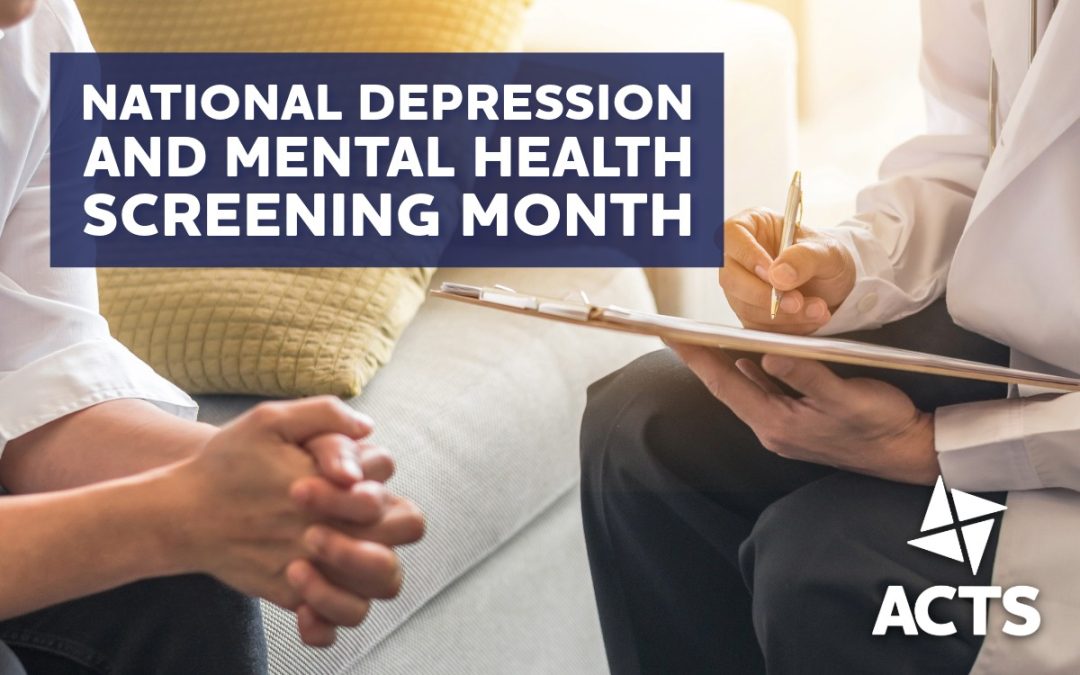
Know the Signs: Take Charge of Your Mental Health This October
October is National Depression and Mental Health Screening Month, and October 10 is both World Mental Health Day and National Depression Screening Day. Major depression is one of the most common mental illnesses, affecting 21 million adults in the United States.
Common symptoms of depression include:
- Persistent sadness or low mood
- Loss of interest or pleasure in activities
- Changes in appetite or weight
- Sleep difficulties (insomnia or oversleeping)
- Fatigue or low energy
- Difficulty concentrating
- Feelings of worthlessness or guilt
- Thoughts of self-harm or suicide
Early screening can make a life-changing difference. By identifying symptoms sooner, individuals can access treatment, manage their mental health more effectively, and improve their overall quality of life.
At ACTS, we’re committed to helping our community prioritize mental wellness. Free, anonymous online screenings are available to anyone looking to take the first step: Take a free screening here: www.MHAScreening.org
If you or a loved one is struggling, ACTS can connect you to a full range of support services, including outpatient care, crisis care, and residential treatment for those facing both mental health and substance use challenges. Remember — asking for help is a sign of strength, and early awareness can save lives.

Fall into Wellness
Tips for Staying Sober This Season
Autumn is a season of change – cooler weather and new routines. For people in recovery, fall can also bring challenges, from seasonal stress to holiday triggers. With the right strategies, you can embrace everything this season offers while protecting your sobriety.
1. Stay Connected to Your Support System
Shorter days can sometimes mean more isolation. Make plans to attend support group meetings, check in with friends, or join seasonal activities in your community.
2. Explore Outdoor Activities
Cooler weather is perfect for sober-friendly activities like hiking, pumpkin picking, or visiting a fall festival. Fresh air and movement are great for mental health.
3. Have a Plan for Seasonal Gatherings
Halloween parties, tailgates, and early holiday events can involve alcohol. Decide ahead of time how you’ll handle offers to drink — and bring your own non-alcoholic beverage.
4. Try New Comfort Foods and Drinks
Swap seasonal cocktails for warm apple cider, chai tea, or pumpkin spice lattes. Cooking healthy comfort foods can be both satisfying and relaxing.
5. Practice Mindfulness
Fall can be busy. Take time to slow down and enjoy small moments — the crunch of leaves underfoot, the smell of cinnamon, the feeling of a cozy sweater.
6. Volunteer
The season of giving is a great time to help others. Volunteering can boost mood, build connections, and reinforce your purpose in recovery.
The Bottom Line:
Fall is a chance to reset, recharge, and strengthen your recovery. If you or someone you know needs support, ACTS is here in Tampa Bay to help. Call 813-246-4899 or visit www.actsfl.org for more information.
Inside ACTS
Latest Articles
No Results Found
The page you requested could not be found. Try refining your search, or use the navigation above to locate the post.